Can Bunions Be Corrected Without Surgery? Non-Surgical Treatment Options Explained
March 16, 2026
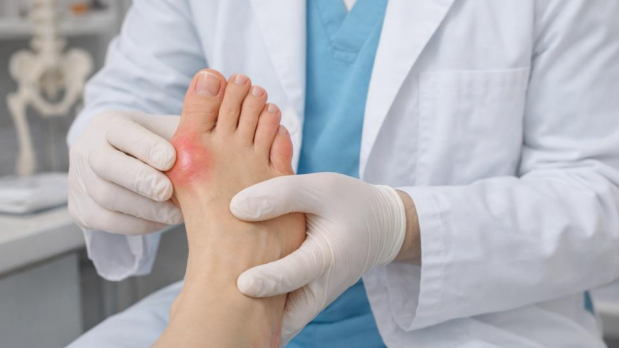
Bunions are a common foot condition that can cause pain, swelling, and difficulty wearing certain shoes. Because the deformity develops gradually, many patients look for ways to manage the problem without undergoing surgery.
Understanding can bunions be fixed without surgery requires knowing how bunions develop and what non-surgical treatments can realistically achieve. While conservative treatments cannot reverse the structural deformity, they can often reduce pain, improve comfort, and help slow the progression of the condition.
Can Bunions Be Corrected Without Surgery?
A bunion forms when the joint at the base of the big toe gradually shifts out of alignment. Over time, the big toe begins to lean toward the second toe, causing the joint to protrude outward. This misalignment is known medically as hallux valgus.
Because bunions involve a structural change in the bones of the foot, non-surgical treatments cannot permanently reposition the joint. However, many people successfully manage symptoms without surgery.
With the right approach, conservative care can relieve pressure on the joint, reduce inflammation, and improve overall foot function.
How to Fix Bunions Without Surgery: Conservative Treatment Options
Podiatrists often recommend conservative treatments that reduce irritation and support healthier foot mechanics. With proper professional guidance, these strategies help relieve pressure on the bunion joint and improve comfort during daily activities.
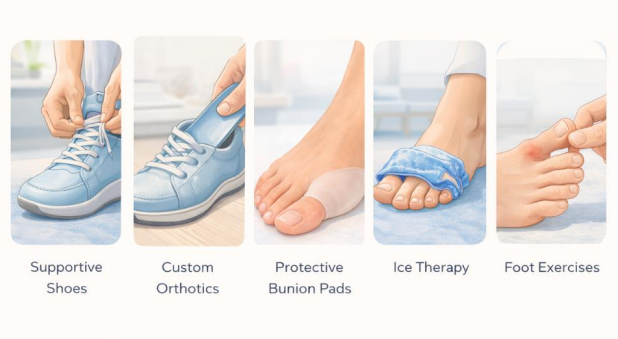
Wearing Supportive Shoes
Footwear plays a major role in bunion symptoms. Tight shoes, narrow toe boxes, and high heels can increase pressure on the bunion joint and make pain worse.
Choosing shoes with a wide toe box, soft materials, and proper arch support helps reduce friction and allows the toes to move more naturally. Many patients experience noticeable improvement simply by switching to more supportive footwear.
Custom Orthotics and Foot Support
Custom orthotics may help redistribute pressure across the foot and improve overall alignment while walking. By supporting the arch and stabilizing foot mechanics, orthotics can reduce strain on the big toe joint.
Although orthotics cannot correct the bunion itself, they can help manage discomfort and improve daily function.
Padding, Splints, and Toe Spacers
Protective devices can also provide bunion relief without surgery. Bunion pads help cushion the joint and reduce irritation from shoes, while silicone toe spacers may temporarily improve toe alignment.
Night splints are sometimes used to gently stretch the joint during sleep. While these devices cannot reverse the deformity, they may help reduce pressure and improve comfort.
Pain and Inflammation Management
When bunions become inflamed, pain can increase significantly. Treatments such as anti-inflammatory medications, ice therapy, and temporary activity modification can help reduce swelling and discomfort during flare-ups.
Managing inflammation is often an important part of conservative care.
Exercises That Support Foot Function
Certain exercises may help maintain flexibility and mobility in the big toe joint. Stretching and strengthening exercises can improve foot mechanics and reduce stiffness.
While these exercises will not correct the bunion itself, they may help support overall foot health and comfort.
How to Get Rid of Bunions Without Surgery: What Is Realistic?
Many patients hope to completely eliminate a bunion without surgery. However, it is important to understand what conservative treatments can realistically accomplish.
In most cases, non-surgical treatments focus on managing symptoms rather than reversing the structural deformity. These approaches help reduce discomfort, improve foot function, and slow the progression of the condition.
The main goals of conservative treatment include:
- reducing pain and irritation
- improving comfort while walking
- slowing the progression of the deformity
- preventing complications such as calluses or joint inflammation
With proper care, many people are able to manage bunion symptoms effectively for years without surgical intervention.
When Is Bunion Surgery Recommended?
Although many patients manage bunions with conservative care, surgery may be recommended in certain situations.
A surgical evaluation may be appropriate when:
- pain persists despite non-surgical treatments
- the bunion continues to worsen
- the deformity interferes with walking or daily activities
- joint stiffness or arthritis develops
Bunion surgery focuses on correcting the bone alignment and restoring normal joint mechanics. Modern procedures are designed to reduce pain and improve long-term foot function.
Professional Evaluation for Bunion Pain
If bunion symptoms become more noticeable, a professional evaluation can help determine the most appropriate treatment plan.
A podiatrist will typically assess the alignment of the big toe joint, evaluate walking mechanics, and determine whether conservative care or further treatment is recommended.
You can learn more about bunion evaluation and treatment at Foot & Ankle Specialists of Utah, where specialists provide personalized care for a wide range of foot conditions.
Next Steps for Managing Bunion Pain
Understanding can bunions be corrected without surgery helps set realistic expectations for treatment. While conservative care cannot reverse the structural deformity, many non-surgical strategies can reduce pain, improve comfort, and slow the progression of a bunion.
If bunion pain continues to interfere with daily activities, the Utah-based podiatry team at Foot & Ankle Specialists of Utah can help determine the best course of care. Book an appointment today for a comprehensive evaluation and a personalized treatment plan.
Schedule an Appointment Today!
If any of these signs or symptoms sound familiar to you, don't wait! Schedule an appointment with one of our specialists TODAY and get back to living your best life! For more tips, tricks, and helpful information, be sure to check out our social media accounts!