Diabetic Nail Problems: Ingrown Toenails, Infections, and When to Seek Care
February 3, 2026

For people living with diabetes, nail health plays a much larger role in overall foot safety than many realize. Changes in circulation, nerve function, and immune response can cause minor nail issues to progress more quickly and heal more slowly. Diabetic nail problems may begin subtly, but without proper care, they can increase the risk of infection and more serious complications.
Understanding how diabetes affects nail health, and knowing when professional care is needed, can help prevent small concerns from becoming major medical issues.
How Diabetes Affects Nail Health
Diabetes can reduce blood flow to the feet, limiting the delivery of oxygen and nutrients that support healthy nail growth. At the same time, nerve damage may decrease sensation, making it harder to notice pressure, irritation, or early signs of infection.
These changes explain the close relationship between diabetes and toenails. Nails may become thicker, more brittle, or change shape over time. When combined with slower healing and a weakened immune response, even small nail injuries can become problematic.
Ingrown Toenails and Diabetes
Ingrown toenails develop when the edge of the nail grows into the surrounding skin. While uncomfortable for anyone, ingrown toenails and diabetes require special attention due to the increased risk of infection and delayed healing.
Why Ingrown Toenails Are More Common in Diabetic Patients
Several factors contribute to ingrown toenails in diabetic patients, including thickened nails, reduced sensation in the toes, and pressure from ill-fitting footwear. Difficulty trimming nails safely can also increase the likelihood of improper nail growth and skin irritation.
Risks of an Ingrown Toenail in Diabetes
An ingrown toenail in diabetes can progress quickly from mild redness to infection. Broken skin along the nail border allows bacteria to enter, and reduced circulation slows the body's ability to heal.
Because complications can escalate rapidly, timely and appropriate ingrown toenail treatment is essential to reduce infection risk and support safe healing.
Diabetic Nail Infections
Nail infections are another common concern for diabetic patients. Both bacterial and fungal infections may spread more quickly when circulation and immune function are compromised.
Ingrown Toenail-Related Infections
When bacteria enter through irritated or broken skin near an ingrown nail, infection can develop quickly. A diabetes ingrown toenail infection may cause swelling, warmth, drainage, or increasing pain. Without prompt care, infection can extend beyond the nail and into surrounding tissue.
Fungal Toenail Infections
Fungal infections often cause nails to become thick, discolored, or brittle. In diabetic patients, untreated toenail fungus can increase pressure on surrounding skin and raise the risk of secondary bacterial infections. Thickened nails may also be more difficult to trim safely, increasing the chance of injury.
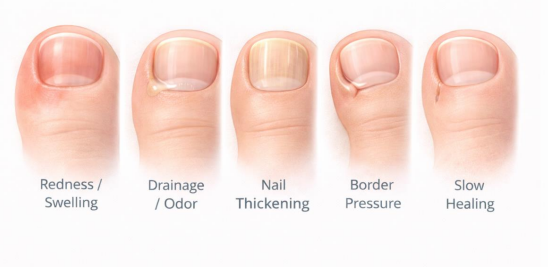
Toenail Problems and Diabetes: Early Warning Signs
Recognizing early symptoms is critical when managing toenail problems and diabetes. Warning signs that should not be ignored include:
- Redness or swelling around the nail
- Drainage or odor
- Thickened, brittle, or discolored nails
- Pain or pressure along nail borders
- Cuts or wounds that heal slowly
This overview of ingrown toenails helps explain how early symptoms can worsen when left untreated, especially for patients with diabetes.
Proper Nail Care for Diabetic Patients
Consistent nail care plays a key role in preventing infections and identifying problems before they become serious, especially for individuals with diabetes:
- Inspect feet and nails daily to identify changes early
- Trim nails straight across and avoid cutting them too short
- Keep feet clean and dry, paying attention to areas around the nails
- Avoid self-treating thickened or ingrown nails
- Wear properly fitting shoes to reduce pressure on the toes
- Schedule routine podiatric visits for ongoing diabetic foot care
Ongoing diabetic foot care helps identify nail concerns early, manage thickened nails safely, and reduce the risk of infection. Professional care is often the safest option for maintaining long-term nail and foot health.
When to Seek Professional Podiatric Care
Prompt evaluation is recommended for individuals with ingrown toenail with diabetes or other nail-related concerns, especially when symptoms include:
- Nail pain or swelling
- Recurrent ingrown nails
- Signs of infection
- Difficulty trimming nails safely
- Open or slow-healing skin near the nail
Addressing nail problems early is especially important for people with diabetes, as even minor issues can progress quickly without proper care. Timely podiatric evaluation helps reduce the risk of infection, delayed healing, and more serious complications, while supporting long-term mobility and foot health.
Taking the Next Step Toward Healthier Nails
Diabetic nail issues are common, but they are manageable with proper care and early attention. If you notice nail pain, infection, or changes that are not improving, professional podiatric evaluation can help prevent complications and protect long-term foot health.
If diabetic nail pain, infection, or changes are not improving, professional care from Foot & Ankle Specialists of Utah can help prevent complications. Our Utah-based podiatry team provides comprehensive diabetic foot and nail care focused on early intervention and long-term foot health. Book an appointment today to address concerns before they worsen.
For more tips, tricks, and helpful information, be sure to check out our social media accounts!