Foot and Plantar Warts: What They Are, Why They Spread, and How to Treat Them
December 17, 2025
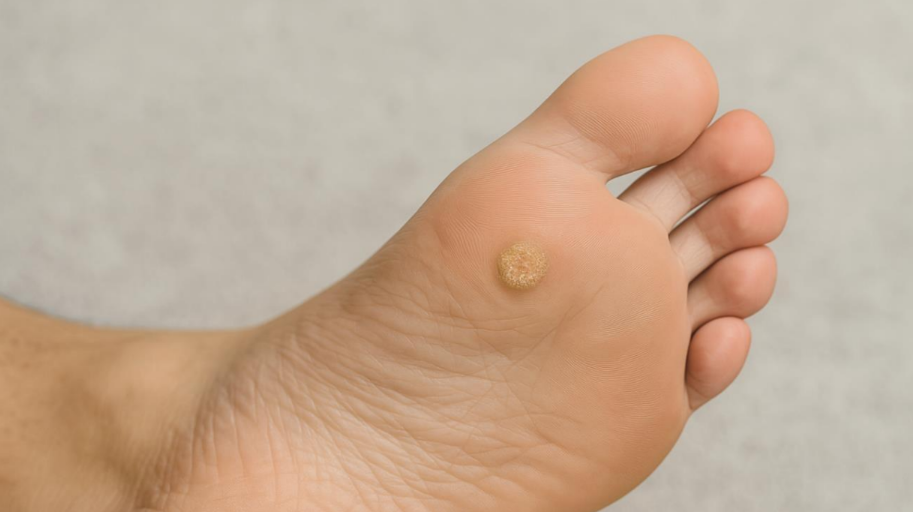
Foot and plantar warts are extremely common, especially among children, teens, and anyone who spends a lot of time barefoot in shared spaces. These small, firm growths can appear on the toes, heel, or high-pressure areas of the foot. While they are harmless, they can become irritating, and in many cases warts on the foot become painful as they grow inward under pressure.
Understanding what causes foot warts, why they spread easily, and how to treat them effectively can help you prevent long-term discomfort and stop future infections.
What Are Foot and Plantar Warts?
Plantar warts develop when HPV infects the outer layer of skin, usually in areas of the foot that bear the most pressure. Because the bottom of the foot absorbs your body’s weight with every step, a wart on the bottom of the foot often grows inward, forming a hard, callused surface.
This inward growth is what makes many plantar warts on the foot painful, especially while standing or walking.
Warts can also appear on the toes as a wart on the toe, or they may form in clusters known as mosaic warts. Though noncancerous, they can spread quickly and become increasingly uncomfortable if left untreated.
What Causes Foot Warts?
Many patients want to understand what causes foot warts and why they suddenly appear. The cause is simple: HPV enters the skin through tiny breaks, cuts, or weak spots in the outer layer.
The most common causes of plantar warts on feet include:
- Walking barefoot in public areas such as pools, gyms, or locker rooms
- Moisture from sweaty shoes or socks
- Sharing footwear
- Skin irritation or small injuries that allow the virus to enter
- Weakened immune response or stress
Anyone can develop foot warts, but people who go barefoot frequently or have softened skin from excess moisture are at higher risk.
How Plantar Warts Spread
Yes, plantar warts are contagious. The virus spreads easily in warm, moist environments and can survive on shared surfaces for long periods.
Plantar warts on feet are also contagious to others. Touching a wart or stepping on a contaminated surface can transfer the virus, allowing it to spread to family members or to other parts of your own foot. Early treatment helps reduce pain and lowers the risk of spreading the infection.
Common Symptoms of Foot and Plantar Warts
Foot warts have several recognizable features:
- A rough, raised, or hardened spot on the skin
- A thick, callused outer layer
- Tiny black dots inside (clotted capillaries)
- Pain when squeezing the sides of the lesion
- A lesion that disrupts normal skin lines
- Pain when walking on a wart on the bottom of the foot
Many people describe the sensation as “stepping on a pebble.”
Why Plantar Warts Become Painful Over Time
A plantar wart may begin as a small bump but can become painful as it grows deeper into the skin. Pressure from walking pushes the wart inward, irritating nearby nerves and tissues. This inward growth is why warts on the foot become painful over time.
Diagnosing Foot and Plantar Warts
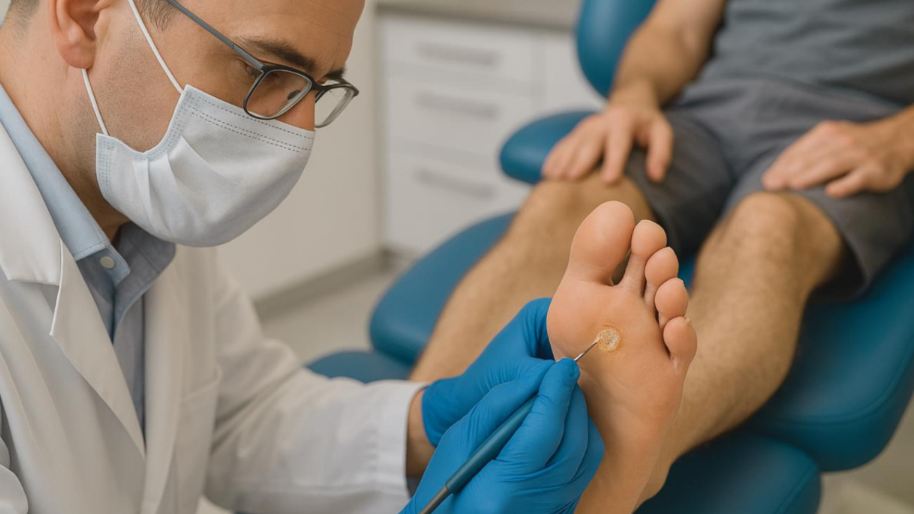
A foot specialist can usually diagnose a wart during a simple exam. Your provider may:
- Gently trim thickened skin to reveal black dots
- Apply pressure to distinguish wart pain from callus pain
- Examine how the spot affects your natural skin lines
Biopsies or imaging are rarely needed unless the growth appears unusual.
Treatment Options to Remove Plantar Warts
Over-the-counter treatments often target only the surface. Professional care treats the deeper layers where the virus lives, including the roots of a plantar wart, which helps prevent recurrence.
Professional In-Office Treatments
Foot specialists use a variety of in-office methods to remove plantar warts safely and effectively. These may include topical medications, procedures that target deeper layers, or therapies designed to stimulate the body’s natural immune response. Treatment plans vary based on the size, depth, and persistence of the wart.
At-Home Care (When Appropriate)
- OTC salicylic acid
- Daily exfoliation after soaking
- Keeping feet dry
- Avoiding barefoot walking
How Specialist Treatment Helps Remove Warts Fully
Foot specialists use precise techniques to reach deeper viral tissue, not just the surface, helping ensure the roots of a plantar wart are fully removed and less likely to return.
Learn more about wart care on our wart services page.
How to Prevent Warts From Spreading
- Wear sandals in public showers
- Avoid picking at warts
- Keep feet clean and dry
- Change socks daily
- Do not share shoes or socks
- Cover warts during sports or activities
Because plantar warts are contagious, prevention is a key part of treatment.
When to See a Foot & Ankle Specialist
Seek care if:
- The wart is painful
- It’s spreading or multiplying
- Home treatments aren’t helping
- You have diabetes, neuropathy, or circulation issues
- Walking becomes uncomfortable
Finding Relief From Foot & Plantar Warts
Plantar warts are common and very treatable with the right care. Early diagnosis prevents spreading, reduces pain, and helps ensure the wart is fully removed. The team at & Ankle Specialists of Utah provides safe and effective treatment options to restore comfort.
Book an appointment today to get lasting relief and protect your feet from further infection.
Schedule an Appointment Today!
If any of these signs or symptoms sound familiar to you, don’t wait! Schedule an appointment with one of our specialists TODAY and get back to living your best life! For more tips, tricks, and helpful information, be sure to check out our social media accounts!