Grade 3 Turf Toe: Symptoms, Severity, and Treatment Options
May 13, 2026
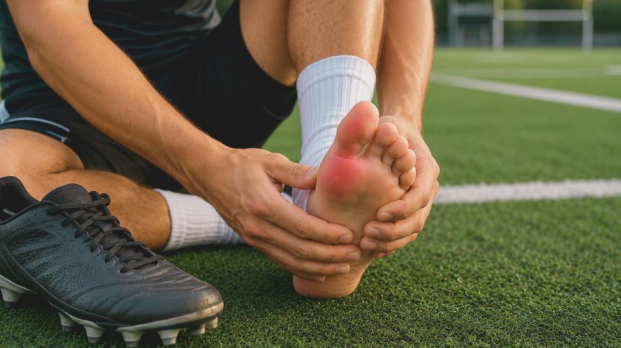
Turf toe is a common sports-related injury that affects the big toe joint, but not all cases are the same. While mild injuries may improve with conservative care, grade 3 turf toe represents the most severe level of injury and can significantly affect walking, movement, and joint stability.
Understanding how this injury occurs, what symptoms to watch for, and why early treatment matters can help reduce the risk of long-term complications.
What Is Turf Toe?
Turf toe is a sprain injury involving the ligaments and soft tissues surrounding the base of the big toe. It typically occurs when the toe bends upward beyond its normal range, placing excessive stress on the joint.
To better understand what turf toe injury is, it helps to think of it as a significant strain to the structures that stabilize the big toe during movement. This type of injury is commonly associated with sports or activities that involve sudden force, rapid direction changes, or repeated push-off motions.
What Makes Grade 3 Turf Toe More Severe?
Turf toe injuries are commonly divided into three grades based on severity.
- Grade 1 involves mild stretching of the soft tissues.
- Grade 2 includes partial tearing and moderate swelling or pain.
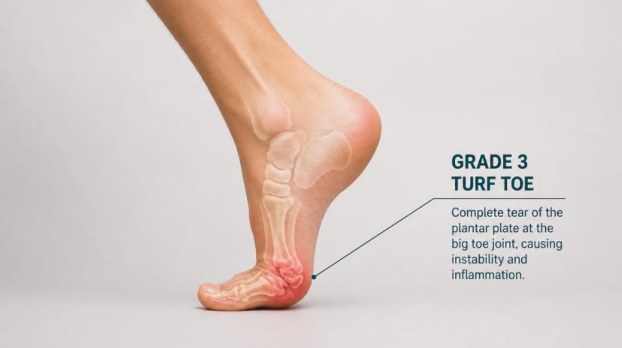
- Grade 3 involves severe ligament damage or complete tearing, often leading to instability in the joint.
Understanding what is grade 3 turf toe injury is important because this level of damage can significantly affect mobility and long-term joint function. In more severe cases, turf toe grade 3 injuries may also involve cartilage damage or difficulty bearing weight.
Symptoms of Grade 3 Turf Toe
Symptoms of grade 3 turf toe are typically more severe than those seen in mild or moderate injuries.
Common symptoms may include:
- Intense pain at the base of the big toe
- Significant swelling around the joint
- Bruising on the toe or underside of the foot
- Limited movement or stiffness
- Difficulty walking or pushing off the foot
- A feeling of instability in the toe joint
Clinically, what does grade 3 turf toe look like may include significant swelling around the base of the big toe, visible bruising, and difficulty putting weight on the foot.
How Grade 3 Turf Toe Typically Occurs
Grade 3 turf toe often develops during activities that place sudden force on the front of the foot while the big toe is bent upward. This may occur during sprinting, jumping, abrupt direction changes, or forceful push-off movements.
Artificial turf surfaces, flexible athletic footwear, and repetitive stress on the forefoot can also increase strain on the big toe joint. Similar mechanisms are often involved in sports-related foot injuries affecting the foot and ankle.
Diagnosing Grade 3 Turf Toe
Proper evaluation is important to determine the severity of the injury and identify any additional joint damage.
A podiatrist will typically assess:
- Swelling and bruising
- Joint stability
- Pain with movement
- Ability to bear weight
Imaging studies such as X-rays or MRI scans may also be recommended to evaluate soft tissue damage and rule out fractures or other injuries. Understanding what is turf toe grade 3 often requires both a physical examination and imaging to fully assess the condition.
Treatment Approaches for Grade 3 Turf Toe
Treatment for grade 3 turf toe depends on the severity of ligament damage, joint stability, and the patient's activity level. Because this injury can significantly affect movement and long-term joint function, care is most effective when guided by a foot and ankle specialist.
Immobilization and Protection
Reducing movement in the big toe joint is often an important part of early treatment. This may involve a walking boot, stiff-soled shoe, or other protective support to help stabilize the area during healing.
Rest and Rehabilitation
Limiting strain on the joint allows injured tissues to recover more effectively. Rehabilitation may later focus on restoring flexibility, strength, and stability while helping patients return safely to activity.
When Advanced Treatment May Be Considered
In some situations, advanced treatment may be considered if instability is severe, symptoms persist, or significant ligament damage is present. Understanding what is a grade 3 turf toe injury helps explain why careful evaluation is important when determining the most appropriate treatment approach.
Recovery and Long-Term Joint Stability
Recovery from grade 3 turf toe can take weeks or months depending on the severity of the injury and the treatment approach. Limiting stress on the big toe joint during healing is important to reduce the risk of reinjury and ongoing instability.
Returning to activity too early may lead to persistent pain, stiffness, or reduced joint mobility. Guided rehabilitation and gradual recovery play an important role in protecting long-term joint function.
When to See a Specialist for Turf Toe
Prompt evaluation is important when symptoms are severe or continue to worsen after injury.
You should consider seeing a specialist if:
- Swelling or bruising is significant
- Walking becomes difficult
- Pain does not improve
- The toe feels unstable
- Movement remains limited
Because severe turf toe injuries can affect long-term joint stability, early diagnosis and treatment are important for recovery.
Protecting Joint Stability After a Severe Turf Toe Injury
Grade 3 turf toe is a serious injury that can affect mobility, athletic performance, and long-term joint function if not properly treated. Early evaluation and structured care can help support recovery and reduce the risk of chronic instability or stiffness.
If you are experiencing persistent big toe pain or symptoms following an injury, the podiatry team at Foot & Ankle Specialists of Utah is here to help patients throughout Utah. Schedule an appointment for a comprehensive evaluation and a personalized treatment plan to support proper healing and long-term joint stability.
For more tips, tricks, and helpful information, be sure to check out our social media accounts!