Tendonitis in the Foot: Types, Symptoms, and Treatment Options
November 25, 2025

Foot pain can affect your daily comfort and mobility, especially when it becomes difficult to walk or stand without discomfort. One common cause is tendonitis in the foot, which happens when the tendons become inflamed from overuse, poor footwear, or sudden increases in activity. Because the foot has many tendons, several foot tendonitis types can develop, each with its own symptoms and challenges.
This guide explains the most common types of tendonitis in foot, how to recognize symptoms early, and which tendonitis treatment foot options can help you find relief.
What Is Tendonitis in the Foot?
Tendonitis refers to inflammation or irritation of a tendon. Tendons support the movement and stability of your foot and ankle, so inflammation can make everyday activities (such as standing, walking, climbing stairs, or exercising) painful or difficult.
You may experience tendonitis foot symptoms after overuse, repetitive motion, or a sudden increase in activity. Poor footwear, improper training, and age-related changes to tendon elasticity can also contribute. When the tendons become inflamed, movement becomes painful and the area may feel swollen, warm, or tender.
Early recognition is essential, because untreated tendonitis can lead to long-term dysfunction or even tendon tears.
Why Foot Tendonitis Happens
Several factors can lead to tendon irritation, including:
- Overuse from running, walking, or sports
- Poor foot mechanics such as flat feet or high arches
- Wearing unsupportive or worn-out shoes
- Tight calf muscles creating excess tension
- Previous injuries that weaken the tendons
- Standing for long hours
- Sudden increases in training intensity or duration
Because the foot absorbs significant impact throughout the day, these stressors can quickly trigger inflammation.
If your symptoms started after exercise, running, or increased activity, you may find helpful information on our Sports Injuries page.
Common Types of Tendonitis in the Foot
Foot tendonitis may affect different tendons depending on your activity level, foot structure, and history of injuries. Here are the most foot tendonitis common types.
1. Posterior Tibial Tendonitis
This condition affects the tendon along the inner side of the ankle and into the arch. The posterior tibial tendon helps maintain the arch and stabilize the foot while walking.
Symptoms may include:
- Inner ankle pain
- Swelling along the tendon
- Pain when standing or walking for long periods
- A flattening arch or rolling inward of the foot
If untreated, this condition can lead to adult-acquired flatfoot, a more serious and progressive problem.
2. Peroneal Tendonitis
This tendonitis involves the ankle tendons on the outer side of the foot. These tendons help stabilize the ankle and prevent it from rolling outward.
Symptoms may include:
- Pain or aching along the outer ankle
- Warmth or swelling
- Pain when moving side to side
- Ankle instability
Peroneal tendonitis often affects runners, hikers, and people with high arches.
3. Extensor Tendonitis
The extensor tendons run across the top of the foot and help lift the toes. This type of tendonitis foot condition is common in people who tightly lace their shoes or do repetitive activities like hiking or climbing.
Symptoms may include:
- Pain on the top of the foot
- Tenderness under shoelaces
- Increased pain when lifting the toes
Achilles Tendonitis
The Achilles tendon is the largest tendon in the foot and connects the calf muscles to the heel. Inflammation causes pain behind the heel and calf, especially during activity.
Symptoms may include:
- Morning stiffness
- Pain during walking, running, or jumping
- Swelling or thickening around the tendon
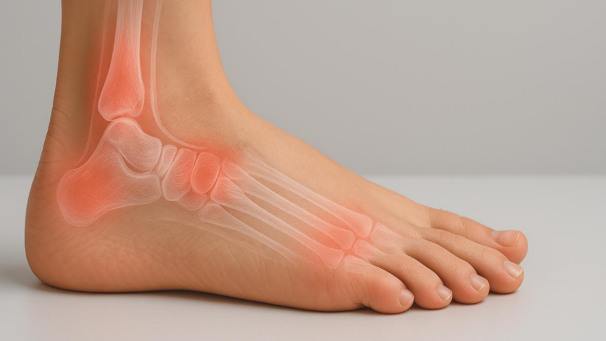
Symptoms of Foot Tendonitis
While symptoms vary by tendon, most people experience:
- Pain that worsens with movement
- Swelling or warmth near the affected tendon
- Stiffness after periods of rest
- Tenderness to touch
- Weakness or instability in the foot or ankle
- Discomfort when pushing off during walking
If these symptoms persist for more than a few days, tendonitis may be the cause.
How Foot Tendonitis Is Diagnosed
A specialist will evaluate the affected tendon to determine the cause of your pain. Diagnosis may include:
- A physical exam to identify the affected tendon
- Evaluating your gait and range of motion
- Checking for swelling or tenderness
- Reviewing your activity level and footwear
- Imaging, such as X-rays or ultrasound, if needed
Identifying the exact tendon involved helps guide more effective treatment.
Tendonitis Treatment for the Foot
Treatment varies depending on severity, but most cases improve with early, consistent care.
At-Home Care
- Rest and reduce activities that cause pain
- Ice therapy to reduce swelling
- Supportive or cushioned footwear
- Avoiding barefoot walking
- Stretching and gentle strengthening exercises
Professional Treatment Options
- Custom orthotics to correct foot mechanics
- Physical therapy targeting strength and flexibility
- Bracing or immobilization for tendon protection
- Shockwave therapy (when appropriate)
- Anti-inflammatory treatments
- Advanced therapies for chronic or severe cases
When to See a Specialist
Schedule a visit if:
- Pain lasts longer than 1–2 weeks
- The pain interferes with daily activity
- Swelling does not improve
- Walking becomes difficult
- Your foot or ankle feels unstable
- You notice changes in your arch
Early treatment prevents tendonitis from becoming chronic.
Finding Relief From Foot Tendonitis
Foot tendonitis is common, but with proper care, it’s also highly treatable. Recognizing symptoms early and choosing the right tendonitis treatment foot plan can restore comfortable movement and prevent long-term complications. The team at Foot & Ankle Specialists of Utah is here to help you recover confidently and get back to the activities you enjoy.
Book an appointment today to begin your path toward lasting recovery.
Schedule an Appointment Today!
If any of these signs or symptoms sound familiar to you, don’t wait! Schedule an appointment with one of our specialists TODAY and get back to living your best life! For more tips, tricks, and helpful information, be sure to check out our social media accounts!