
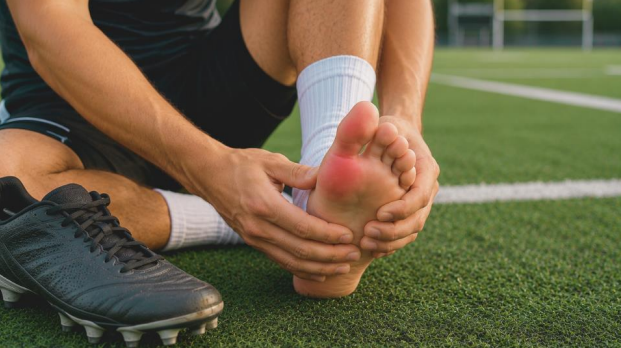
Grade 3 turf toe is a severe sprain of the main joint at the base of the big toe. It typically involves a complete tear of the soft tissues that support the joint, causing substantial pain, swelling, bruising, and difficulty walking.
Unlike a mild turf toe injury, a Grade 3 injury usually requires immobilization, a structured rehabilitation plan, and close medical supervision. Some cases may require surgery when the joint is unstable or other structures are damaged.
What Is Turf Toe?
Turf toe occurs when the big toe is forcibly bent upward beyond its normal range. This places excessive stress on the ligaments, tendons, joint capsule, and plantar plate that stabilize the first metatarsophalangeal joint.
The injury often happens when the front of the foot remains planted while the heel rises and the body continues moving forward. Although commonly associated with football, turf toe can also occur during soccer, basketball, wrestling, dance, running, and other activities involving forceful push-off or rapid direction changes.
How Are Turf Toe Injuries Graded?
Turf toe is generally divided into three grades:
- Grade 1: The supporting tissues are stretched, causing mild tenderness and swelling.
- Grade 2: The tissues are partially torn, producing more noticeable pain, bruising, swelling, and limited movement.
- Grade 3: The supporting tissues are completely torn, causing severe tenderness, swelling, bruising, weakness, and joint instability.
Grade 3 is the most serious level. The injury may also involve cartilage damage, a fracture, displacement of the small sesamoid bones beneath the joint, or dislocation of the big toe.
Symptoms of Grade 3 Turf Toe
Symptoms are usually significant and may begin immediately after the injury.
Common signs include:
- Severe pain at the base of the big toe
- Significant swelling around the joint
- Bruising above or beneath the toe
- Difficulty moving the big toe
- Pain when standing or walking
- Inability to push off the injured foot
- Weakness or instability in the joint
- A popping sensation at the time of injury
The appearance alone cannot determine the grade. A professional examination and imaging may be needed to identify which structures are damaged.
How Does Grade 3 Turf Toe Happen?
A severe injury may occur when an athlete is tackled while the forefoot is planted, lands awkwardly after a jump, or changes direction while the big toe is extended.
Contributing factors may include:
- Flexible athletic shoes with limited forefoot support
- Hard playing surfaces
- Sudden acceleration or stopping
- Repeated push-off movements
- A previous big-toe joint injury
- Sports that require frequent jumping, cutting, or sprinting
Learn more about other sports-related foot and ankle injuries.
What Should You Do Immediately After the Injury?
Stop the activity and avoid trying to play through severe big-toe pain. Continuing to run or push off the injured foot may worsen the damage.
Initial care may include:
- Resting and avoiding weight on the injured foot
- Applying a cold pack wrapped in a cloth
- Using light compression when appropriate
- Elevating the foot to reduce swelling
- Protecting the toe from additional movement
Do not forcefully stretch, tape, or manipulate a severely injured toe without professional guidance. Seek prompt evaluation if you cannot bear weight, the joint looks deformed, or the pain and swelling are substantial.
How Is Grade 3 Turf Toe Diagnosed?
A podiatrist will ask how the injury happened and examine the big-toe joint for tenderness, swelling, movement, strength, and instability.
Diagnostic imaging may include:
- X-rays to check for fractures, dislocation, or changes in the sesamoid bones
- MRI to examine the plantar plate, ligaments, cartilage, and other soft tissues
An accurate diagnosis helps determine whether the joint can heal with immobilization or whether surgical repair should be considered.
How Is Grade 3 Turf Toe Treated?
Immobilization
The foot may be placed in a walking boot or cast to prevent the big toe from bending while the damaged tissues heal. Crutches may be recommended when putting weight on the foot is too painful or could affect healing.
Physical Therapy
Rehabilitation may begin once pain and swelling allow. Treatment can gradually restore joint movement, foot strength, balance, and the ability to push off safely.
Returning to activity too early may lead to renewed injury, weakness, stiffness, or chronic pain.
Footwear, Taping, and Orthotics
A stiff-soled shoe, rigid insert, orthotic, or taping technique may help limit upward movement of the big toe during later stages of recovery. These measures should be selected based on the injury and the patient’s activity.
Surgery
Not every Grade 3 turf toe injury requires surgery. It may be recommended when there is:
- Severe or complete disruption of the plantar complex
- Persistent joint instability
- A displaced sesamoid fracture
- Loose bone or cartilage within the joint
- Significant cartilage damage
- Failure to improve with nonsurgical care
The goal is to restore stability, movement, and push-off strength.
How Long Does Recovery Take?
Recovery from Grade 3 turf toe usually takes longer than recovery from a mild sprain. Immobilization may be needed for several weeks, followed by gradual rehabilitation.
The time required to return to sports depends on the damaged structures, joint stability, treatment provided, and demands of the activity. Athletes should return only after they can walk, run, change direction, and push off without pain or instability—and after receiving clearance from their treating professional.
Why Early Treatment Matters
An untreated severe turf toe injury may lead to:
- Chronic pain
- Joint stiffness
- Reduced push-off strength
- Ongoing instability
- Changes in the position of the big toe
- Arthritis in the affected joint
- Difficulty returning to sports
Prompt diagnosis can protect the joint and help create a safer recovery plan.
Grade 3 Turf Toe Treatment in Utah
Foot & Ankle Specialists of Utah evaluates turf toe and other sports-related foot injuries affecting athletes and active adults. Our podiatrists can assess the severity of the injury and recommend immobilization, rehabilitation, supportive devices, or surgical care when appropriate.
Appointments are available in Bountiful, Brigham City, Lehi, Ogden, Sandy, Tooele, and West Valley City.
If severe big-toe pain is keeping you from walking or participating in your sport, request an appointment at a convenient Utah office.