
What is athlete’s foot?
Itching, peeling, or burning skin on your feet may be a sign of athlete’s foot. This common fungal infection can affect anyone, even people who do not play sports. Foot & Ankle Specialists of Utah can examine your skin, identify the cause of your symptoms, and recommend treatment.
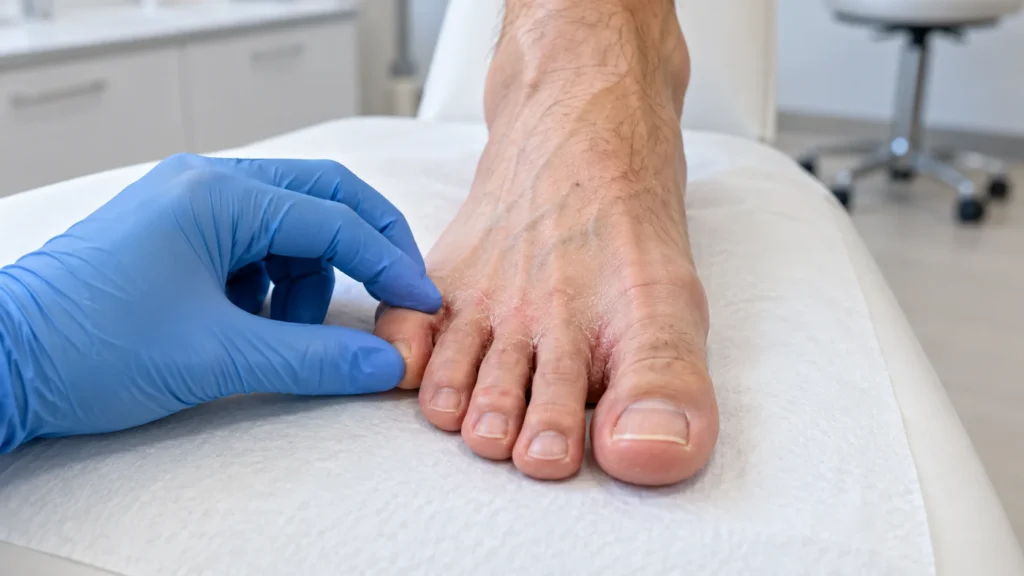
What is athlete’s foot?
Athlete’s foot, also called tinea pedis, is a fungal infection of the skin. It often starts between the toes but can also affect the soles and sides of the feet.
The fungus grows well in warm, damp conditions. Sweaty socks, enclosed shoes, and shared shower areas can increase exposure. The infection can spread through skin contact or contaminated towels, footwear, and surfaces.
What symptoms should I look for?
Common symptoms include:
- Itching, burning, or stinging.
- Peeling or scaly skin, especially between the toes.
- Cracks in the skin that may feel sore.
- Irritated skin or small blisters.
Other skin problems can look similar. An exam can help distinguish a fungal infection from another cause of irritation. Thickened or discolored nails may also need a separate evaluation for toenail fungus.
How is athlete’s foot diagnosed and treated?
A podiatrist will examine the affected skin and may take a small skin scraping to check for fungus when the diagnosis is unclear.
Treatment usually involves an antifungal medicine applied to the skin. Some products are available without a prescription. More widespread or persistent infections may need prescription treatment, including oral medicine in selected cases.
Follow the product directions or your provider’s instructions for the full treatment period, even when the itching improves. Avoid using an over-the-counter steroid cream on a suspected fungal rash; it can make the infection worse.
How can I reduce the chance of it coming back?
Daily habits can help keep moisture under control and limit exposure:
- Wash your feet and dry carefully between the toes.
- Wear clean socks and change them when they become damp.
- Let shoes dry between uses and choose breathable footwear.
- Wear shower sandals in shared showers, locker rooms, and pool areas.
- Keep towels, socks, and shoes for your own use.
These steps can lower your risk, but infections can still return. Recurring symptoms may need another exam or a change in treatment.
When should I seek medical care?
Schedule a visit if the rash spreads, keeps returning, or does not improve with treatment used as directed. If you have diabetes, contact your care team early about cracks, sores, or a new foot rash. Learn more about our diabetic foot care.
Seek prompt medical care for spreading redness, warmth, swelling, drainage, or fever. These can be signs of a bacterial infection that needs additional treatment.
Where can I find athlete’s foot treatment in Utah?
Our Utah offices are in Bountiful, Brigham City, Lehi, Ogden, Sandy, Tooele, and West Valley. Find contact information on our locations page and arrange a visit for persistent or uncomfortable symptoms.