
When does a foot wound need professional care?
A wound that is getting larger, keeps reopening, or is not showing signs of healing needs medical evaluation. If you have diabetes, poor circulation, or reduced feeling in your feet, contact a healthcare professional promptly about any new foot wound.
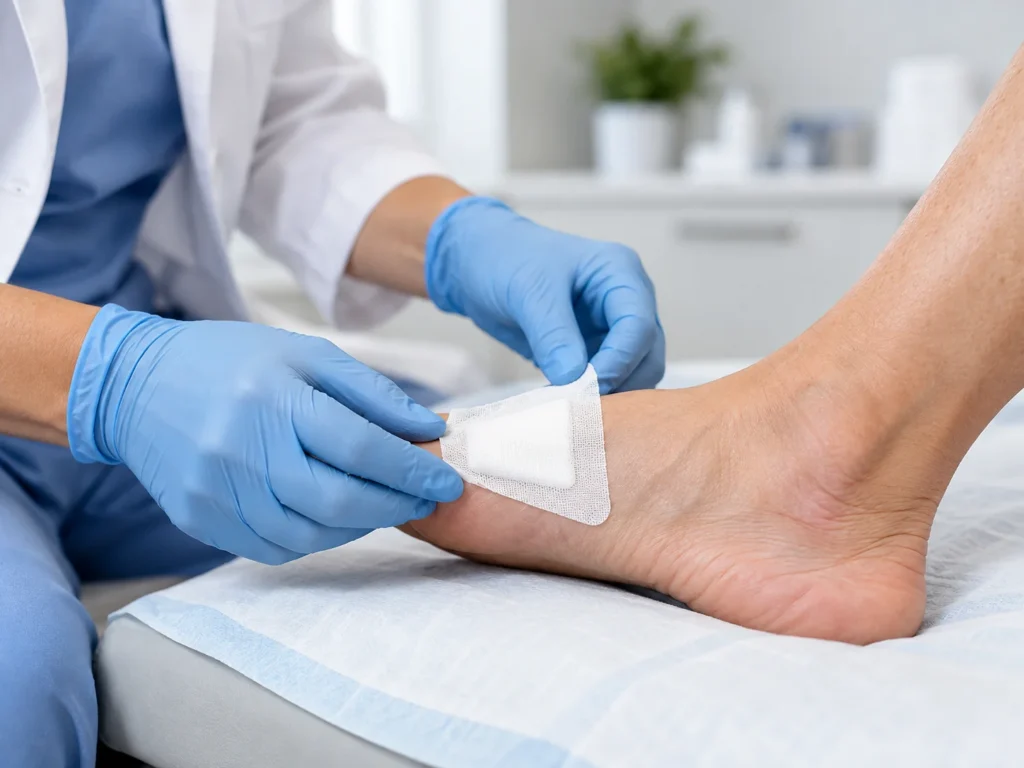
Do not wait two weeks to seek advice when these risk factors are present. Even a small sore can become serious without much pain.
Foot & Ankle Specialists of Utah evaluates foot and ankle wounds and develops treatment plans based on the wound and your overall health.
Why do some wounds heal slowly?
Healing can be affected by several problems, including:
- Reduced blood flow to the foot.
- Diabetes and elevated blood sugar.
- Repeated pressure or rubbing from footwear.
- Swelling related to vein problems.
- Infection.
- Smoking or poor nutrition.
Treating the underlying problem is an important part of wound care. Changing a dressing alone may not be enough.
What happens during a wound evaluation?
Your podiatrist examines the wound’s size, depth, drainage, and surrounding skin. They may also check circulation, sensation, swelling, and pressure on the area.
Depending on the findings, you may need blood-flow testing, imaging, or a sample to check for infection. Some patients need coordinated care with their primary care provider, a vascular specialist, or a wound care center.
What treatments may be recommended?
Your plan may include:
- Wound cleaning and dressings: Products chosen to protect the wound and manage moisture.
- Debridement: Removal of dead or damaged tissue when appropriate to support healing.
- Pressure relief: Protective footwear or other devices to reduce stress on the wound.
- Compression therapy: Wraps or stockings for selected wounds related to vein problems and swelling. Circulation must be assessed before compression is prescribed.
- Negative pressure wound therapy: A sealed dressing attached to a suction device that removes fluid and supports healing in selected wounds.
- Skin grafts or skin substitutes: Treatments that may help cover or close certain wounds when standard care is not enough.
Infection may require antibiotics or surgical treatment. Poor blood supply may need treatment by a vascular specialist. No single approach is suitable for every wound.
How should I care for the wound between visits?
Follow your provider’s instructions for dressing changes, bathing, activity, and pressure relief. Do not cut away tissue or start compression wraps yourself. Keep follow-up appointments so the care plan can be adjusted.
Healing time varies with the wound’s cause, size, circulation, and other health conditions.
For diabetes-related wounds, learn more about diabetic foot ulcer treatment.
Which warning signs need urgent attention?
Seek same-day medical care for increasing redness, warmth, swelling, pus, worsening pain, or fever. Rapidly spreading redness, blackened tissue, confusion, or feeling seriously ill requires emergency evaluation.
Wound care close to home
For foot and ankle wound care in Utah, call the office in Bountiful, Brigham City, Lehi, Ogden, Sandy, Tooele, or West Valley for guidance and an appointment.