
What are plantar warts?
Plantar warts are noncancerous skin growths on the soles of the feet. They develop when certain types of human papillomavirus, or HPV, enter through small breaks in the skin.
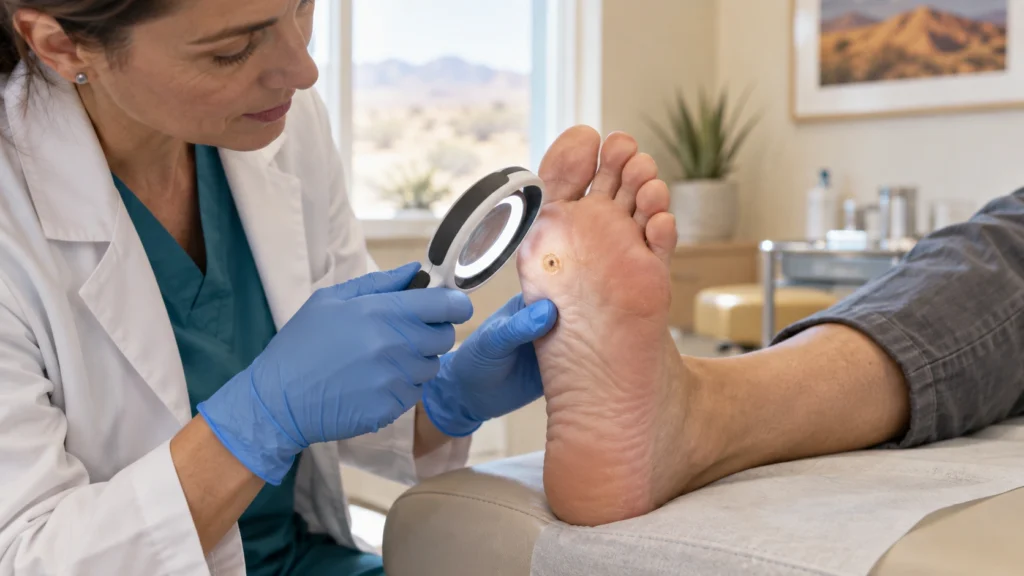
A wart may grow alone or form a cluster called mosaic warts. Pressure from standing and walking can flatten the growth beneath a layer of hard skin, making it uncomfortable.
At Foot & Ankle Specialists of Utah, our podiatrists can help determine whether a rough or painful area is a wart, a callus, or another skin condition.
What does a plantar wart look like?
Common signs include:
- A rough, thickened patch on the sole.
- Small dark dots within the growth, which are tiny blood vessels.
- Tenderness when standing or walking.
- Several small growths grouped together.
Not every wart hurts, and not every painful growth is a wart. An examination is important if you are unsure what you are seeing.
How do plantar warts spread?
The virus can spread through direct contact or contaminated surfaces, including shared showers, locker rooms, and pool decks. Small cuts or softened, damp skin can make infection more likely.
Picking at a wart may spread the virus to nearby skin. Exposure does not mean everyone will develop a wart.
When should I see a podiatrist?
Schedule an evaluation if a growth hurts, spreads, bleeds, changes appearance, or does not improve with treatment. A spot that looks unusual may need further testing.
If you have diabetes, poor circulation, numbness, or a weakened immune system, seek professional advice before treating a suspected wart yourself. Cutting the skin or using wart-removal products without guidance can cause injury.
How are plantar warts treated?
Some warts disappear without treatment, but this can take months or longer. After confirming the diagnosis, your podiatrist may recommend monitoring a painless wart or treating one that causes discomfort.
Treatment options may include:
- Salicylic acid: A medication that gradually removes affected skin when used as directed.
- Freezing treatment: Also called cryotherapy, this damages wart tissue so it can shed.
- Other topical treatments: Selected according to your skin, health, and response to earlier care.
- Removal procedures: Considered for some persistent warts after discussing discomfort, healing, and the risk of scarring.
More than one treatment session may be needed. Warts can return, so follow-up care matters.
How can I reduce the chance of spreading warts?
Wear protective footwear in shared wet areas, avoid sharing towels or foot-care tools, and wash your hands after touching a wart. Do not pick, cut, or shave the growth. Follow instructions for keeping it covered during treatment.
Plantar wart care near you
For plantar wart treatment in Utah, schedule an appointment in Bountiful, Brigham City, Lehi, Ogden, Sandy, Tooele, or West Valley.