
What Is a Diabetic Foot Ulcer?
A diabetic foot ulcer is an open sore on the foot of someone with diabetes. It often develops on the sole, but it can also occur on the toes, heel, or other areas exposed to pressure.
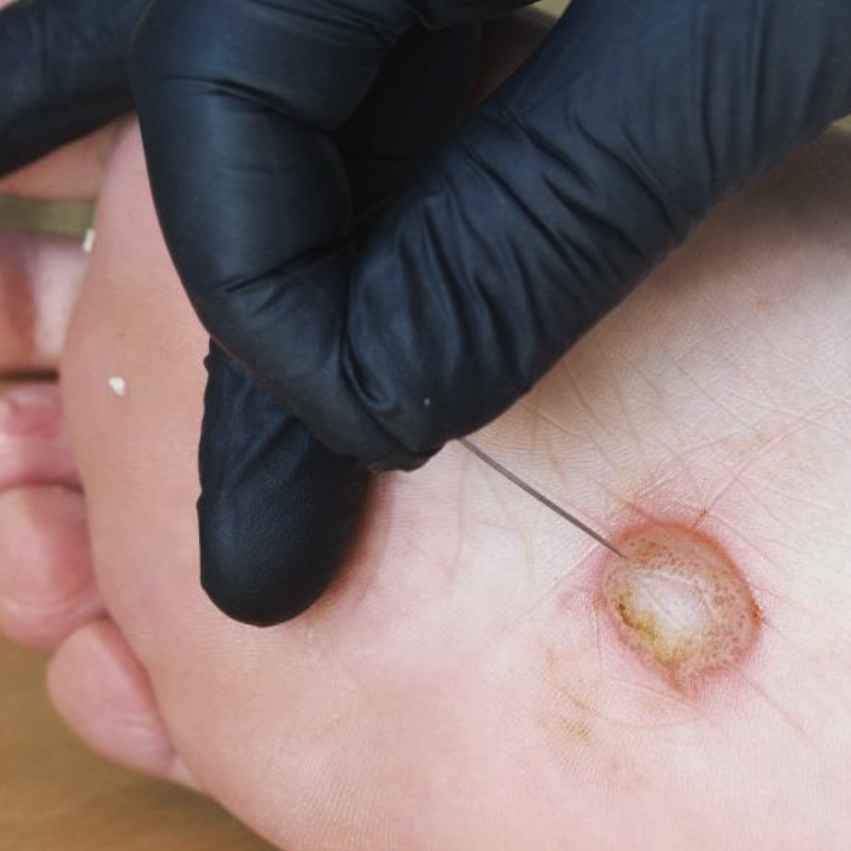
An ulcer may begin after a blister, cut, or area of repeated rubbing. Nerve damage can reduce feeling, so a wound may be present even when you do not feel pain.
At Foot & Ankle Specialists of Utah, care focuses on assessing the wound, reducing pressure, and addressing problems that may delay healing.
Why does diabetes increase the risk of foot ulcers?
Several factors can work together:
- Reduced sensation: Nerve damage may prevent you from noticing an injury.
- Poor circulation: Less blood reaching the foot can make healing harder.
- Repeated pressure: Tight shoes, foot deformities, or thick calluses can place extra stress on the skin.
- Elevated blood sugar: This can interfere with healing and the body’s ability to fight infection.
A previous foot ulcer also increases the chance of another one. Regular diabetic foot care remains important after a wound closes.
What warning signs should I look for?
Check the tops, soles, heels, and spaces between your toes every day. Look for:
- An open sore, broken blister, or crack.
- Drainage or blood on your sock.
- Redness, warmth, or swelling.
- A callus with blood beneath it.
- A new odor or change in skin color.
Use a mirror or ask someone to help if you cannot see the bottoms of your feet.
How quickly should I seek care?
If you have diabetes and discover an open foot wound, contact your podiatrist or diabetes care team the same day. Do not wait for pain or a routine checkup. If you cannot reach your care team, seek urgent medical care.
Rapidly spreading redness, blackened skin, fever with a worsening wound, or feeling seriously ill requires emergency evaluation.
How are diabetic foot ulcers treated?
Your podiatrist checks the wound’s depth, circulation, sensation, and signs of infection. Treatment may include:
- Offloading: A prescribed boot, cast, or other device to reduce pressure.
- Debridement: Professional removal of dead tissue when appropriate.
- Dressings: Wound coverings selected to manage drainage and support healing.
- Infection treatment: Antibiotics when an infection is diagnosed; an uninfected ulcer does not automatically need antibiotics.
- Blood-flow assessment: Referral for vascular treatment if circulation is inadequate.
- Diabetes management: Coordination with your medical team to address blood sugar and other health concerns.
Severe infection or deeper tissue damage may require hospital care or surgery.
What should I do while the ulcer heals?
Follow instructions for dressings and pressure relief, even if the wound does not hurt. Do not soak the foot, cut away calluses, or apply home remedies. Keep follow-up appointments and report changes promptly.
Healing time varies. After closure, protective footwear and regular foot checks can help reduce recurrence.
For diabetic foot ulcer care in Utah, call Bountiful, Brigham City, Lehi, Ogden, Sandy, Tooele, or West Valley for prompt guidance.