
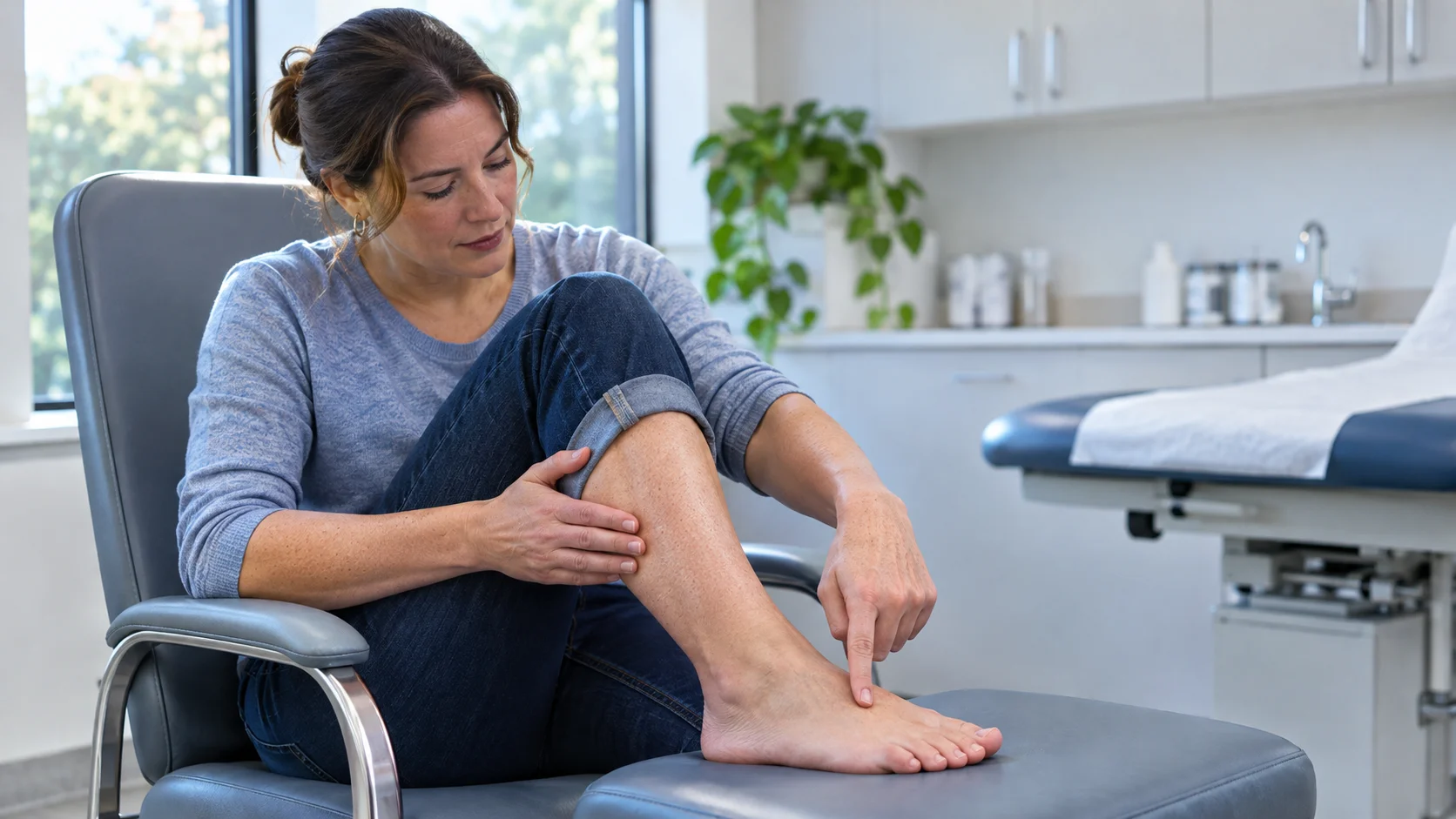
Pain on top of the foot can make walking, exercising, working, or even wearing shoes uncomfortable. Some people notice a dull ache that develops gradually, while others experience sudden or sharp top-of-foot pain after an injury or change in activity.
If you have been wondering, “Why does the top of my foot hurt?” there is not one answer that applies to everyone. Pain in this area can be related to footwear pressure, overuse, irritated tendons, joint problems, nerve symptoms, or an injury to one of the bones or ligaments.
The location of the pain, how it began, and what makes it better or worse can provide useful clues. However, an examination may be necessary to determine the actual cause.
Why Does the Top of My Foot Hurt?
The top of the foot contains bones, joints, tendons, ligaments, nerves, and blood vessels. The extensor tendons run across this area and help lift the toes and front of the foot. The metatarsal bones extend toward the toes, while the joints and ligaments of the midfoot help support the arch and keep the foot stable.
Pain can develop when one of these structures becomes irritated, inflamed, compressed, or injured. A sudden increase in walking or exercise, an awkward step, tight shoes, changes in foot mechanics, or an underlying joint condition may all contribute.
Symptoms alone cannot always distinguish a minor strain from a condition that needs treatment. Persistent or worsening pain should be evaluated by a qualified healthcare professional.
Why Is the Top of My Foot Swollen?
Swelling on top of the foot may develop after an injury, increased activity, tendon irritation, pressure from tight shoes, or a stress injury to one of the foot bones. The area may also feel tender, warm, or painful when walking. Resting and elevating the foot may help mild swelling, but schedule an evaluation if the swelling persists, worsens, follows an injury, or makes it difficult to bear weight. AAOS
Why Does the Top of My Foot Hurt After Running?
Pain on top of the foot after running can occur when training distance or intensity increases too quickly, shoes place pressure across the foot, or the tendons become irritated from repeated movement. A stress reaction or stress fracture can also cause focused pain and swelling that becomes worse during running or walking. Stop running if the pain is sharp, makes you limp, or continues after rest, and see a podiatrist if it keeps returning or becomes more severe. You want to get tips on running with flat feet, learn from our foot doctors.
Common Causes of Pain on Top of the Foot
Extensor Tendon Irritation
The extensor tendons travel along the top of the foot and help lift the toes. Repetitive activity, running, walking uphill, or pressure from tight shoes and laces can irritate these tendons.
Possible symptoms include:
- Aching or burning pain across the top of the foot
- Pain that becomes worse with walking or running
- Tenderness along the tendon
- Discomfort when lifting or straightening the toes
- Mild swelling
Changing the way shoes are laced may reduce direct pressure, but recurring symptoms should still be evaluated to determine why the tendon is being irritated.
Stress Fractures
A stress fracture is a small crack in a bone caused by repetitive force rather than one major injury. Stress fractures can affect the metatarsal bones and may produce localized pain and swelling on top of the foot.
The pain frequently begins gradually and becomes worse during weight-bearing activity. It may initially improve with rest before returning when activity resumes.
Risk factors can include:
- A sudden increase in running, walking, or training
- Repetitive jumping or high-impact exercise
- Worn-out or unsupportive footwear
- Changes in walking or running surfaces
- Reduced bone strength
- Returning to activity too quickly
A stress fracture should not be ignored. Continuing to place repetitive pressure on the injured bone may delay healing or allow the injury to worsen.
Foot Sprains and Strains
A strain affects a muscle or tendon, while a sprain affects a ligament. Either may cause pain on top of the foot after a twist, awkward landing, misstep, or sudden change in direction.
Symptoms can include pain, swelling, bruising, stiffness, or difficulty placing weight on the foot. More significant midfoot injuries may resemble an ordinary sprain at first, which is why severe pain or an inability to walk deserves prompt evaluation.
Learn more about sports injury treatment in Utah.
Tight Shoes or Shoelace Pressure
Shoes that are too tight across the top of the foot can place pressure on tendons, nerves, and prominent joints. Tight shoelaces may produce similar irritation, particularly when the feet swell during activity.
If symptoms occur mainly while wearing a particular pair of shoes, check whether the footwear has enough width and depth. Loosening the laces or changing the lacing pattern may reduce pressure, but ongoing pain may indicate that another problem is present.
Midfoot Arthritis
Arthritis in the joints of the middle foot can produce pain, stiffness, swelling, and difficulty walking. Symptoms may become more noticeable when standing, climbing stairs, walking on uneven ground, or wearing shoes that press against the top of the foot.
Some people also develop a bony prominence over the affected joints. Treatment depends on the severity of the arthritis, the joints involved, and how much the condition affects daily activities.
Gout and Other Inflammatory Conditions
Gout is an inflammatory form of arthritis that can cause sudden, intense joint pain. Although it frequently affects the big toe joint, other joints in the foot can also be involved.
A gout flare may cause:
- Sudden severe pain
- Redness
- Warmth
- Swelling
- Extreme sensitivity to touch
A red, hot, swollen foot can also be a sign of infection or another urgent condition. Do not assume that these symptoms are automatically caused by gout.
Ganglion Cysts
A ganglion cyst is a fluid-filled lump that can develop near a joint or tendon. When it forms on top of the foot, pressure from shoes may make it painful.
The lump may change in size or become more noticeable during activity. A healthcare professional can examine the area and determine whether the lump appears consistent with a ganglion cyst or requires additional testing.
Nerve-Related Pain
Pressure or irritation involving a nerve can cause burning, tingling, numbness, sensitivity, or shooting pain. Symptoms may remain on top of the foot or travel into the toes, ankle, or lower leg.
Nerve symptoms can have several potential causes, so persistent numbness, weakness, or tingling should be professionally evaluated.
Why Does the Top of My Foot Hurt When Walking?
If the top of your foot hurts when walking, weight-bearing may be placing stress on an injured or irritated structure. The repeated motion of lifting the toes and moving the foot forward can aggravate tendons, while the force of each step can make a stress fracture, sprain, or arthritic joint more painful.
Shoes can also contribute. The foot may expand slightly during prolonged walking or exercise, increasing pressure from the upper part of the shoe or the laces.
Pay attention to:
- Whether the pain begins immediately or after walking for a while
- Whether it is concentrated over one small area
- Whether swelling develops
- Whether the pain improves with rest
- Whether changing shoes affects the symptoms
- Whether you recently increased your activity
Pain that repeatedly returns with walking should not be dismissed simply because it improves with rest.
What Can Cause Sudden Pain on Top of the Foot?
Sudden pain may occur after a fall, twist, direct impact, awkward step, or forceful movement. It can also develop during sports or exercise, even when there is no obvious collision.
Occasionally, inflammatory conditions such as gout can cause sudden pain without a clear injury. A stress fracture may also become noticeably painful after developing gradually.
Seek prompt medical attention if sudden pain is accompanied by significant swelling, bruising, an inability to bear weight, an abnormal foot shape, or a snapping or popping sensation during the injury.
How Is Top-of-Foot Pain Evaluated?
A podiatrist will begin by asking about your symptoms and medical history. Helpful information includes:
- Where the pain is located
- When it began
- Whether an injury occurred
- Recent changes in exercise or daily activity
- The shoes you normally wear
- Whether the pain improves with rest
- Whether you have swelling, numbness, or weakness
- Previous foot or ankle injuries
- Medical conditions such as diabetes, arthritis, or osteoporosis
The examination may include checking for swelling, bruising, tenderness, joint movement, strength, stability, sensation, circulation, and changes in the way you walk.
Imaging may be recommended when the examination suggests a possible fracture, joint injury, arthritis, or another condition that cannot be confirmed through the physical examination alone.
How Is Pain on Top of the Foot Treated?
Treatment depends on the diagnosis. Because several different conditions can cause similar symptoms, it is important to identify the source of the pain before choosing a treatment plan.
Depending on the cause, care may include:
- Temporarily reducing activities that increase pain
- Changing footwear or shoelace pressure
- Using supportive shoes
- A brace, walking boot, or other form of protection
- Physical therapy or appropriate exercises
- Treatment for an underlying inflammatory condition
- Custom orthotics when foot mechanics or pressure are contributing
- Medication recommended for the diagnosed condition
- Surgery for selected severe injuries or structural problems
Not everyone with top-of-foot pain needs custom inserts or surgery. Treatment should be based on the examination, diagnosis, activity level, overall health, and personal goals.
Learn more about custom orthotics in Utah and care for chronic foot and ankle pain care in utah.
What Can I Do at Home?
If the discomfort is mild, there was no serious injury, and you do not have warning signs, temporary self-care may help while you monitor the symptoms.
You may consider:
- Resting from activities that make the pain worse
- Elevating the foot when possible
- Applying a wrapped cold pack for 15–20 minutes at a time
- Wearing roomy, supportive shoes
- Loosening laces that press on the painful area
- Avoiding running, jumping, or prolonged walking until symptoms improve
Do not apply ice directly to the skin. Before taking an over-the-counter pain reliever, ask a healthcare professional or pharmacist whether it is appropriate with your medical conditions and current medications.
Do not continue exercising through significant pain. If you have diabetes, poor circulation, reduced sensation, or a history of foot wounds, contact a healthcare professional before relying on home treatment.
When Should I See a Podiatrist?
Arrange an evaluation when:
- The pain is getting worse or repeatedly returns
- Pain affects walking, work, exercise, or normal activities
- The top of the foot remains swollen
- There is tenderness directly over a bone
- Symptoms are not improving after a short period of rest
- You experience burning, tingling, weakness, or numbness
- You suspect a stress fracture
- You have diabetes and develop new foot pain
- You are uncertain what is causing the pain
A podiatrist can determine whether the symptoms are related to an injury, tendon problem, joint condition, footwear pressure, nerve irritation, or another cause.
When Is Foot Pain Urgent?
Seek prompt or emergency medical attention if:
- You cannot walk or place weight on the foot
- The foot appears deformed or is positioned at an unusual angle
- You have severe pain or rapidly increasing swelling
- You heard a snap, pop, or grinding sound during an injury
- There is an open wound or exposed tissue
- The foot becomes pale, blue, unusually cold, or suddenly numb
- The area is red, hot, draining, or accompanied by fever
- You have diabetes and develop a wound, infection signs, or significant swelling
Call 911 for a life-threatening emergency. Online appointment forms should not be used for urgent or emergency medical problems.
Foot Pain Care Across Utah
Foot & Ankle Specialists of Utah evaluates top-of-foot pain, sports injuries, stress fractures, tendon problems, arthritis, and other conditions affecting comfort and mobility.
Our podiatrists serve patients at offices in Bountiful, Brigham City, Lehi, Ogden, Sandy, Tooele, and West Valley City.
Find your nearest Utah podiatry office or request a podiatry appointment if foot pain is interfering with your daily activities.
Frequently Asked Questions
What can cause foot pain on top of the foot without an injury?
Pain without an obvious injury may be associated with tendon irritation, footwear pressure, arthritis, a ganglion cyst, nerve irritation, or a stress fracture that developed gradually. An examination may be needed to identify the cause.
Can tight shoes cause pain on top of the foot?
Yes. A tight shoe or tightly secured laces can place pressure on the tendons, nerves, joints, and skin on top of the foot. Symptoms that continue after changing footwear should be evaluated.
Is pain on top of the foot a sign of a stress fracture?
It can be. Stress fractures may cause localized tenderness and swelling, with pain that becomes worse during weight-bearing activity and improves with rest. Other conditions can cause similar symptoms, so professional evaluation is important.
Why does the top of my foot hurt when I lift my toes?
Lifting the toes engages the extensor tendons that cross the top of the foot. Pain during this motion may be associated with tendon irritation, but an examination is necessary to rule out other causes.
How long should top-of-foot pain last?
Recovery time depends on the cause. Mild irritation may improve with reduced activity and footwear changes, while fractures, arthritis, or significant tendon injuries can take longer. Seek care when pain persists, worsens, or interferes with walking.
Should I see a foot doctor if the top of my foot hurts when walking?
Schedule an evaluation if the pain keeps returning, becomes worse, causes swelling, or changes the way you walk. Seek prompt attention if you cannot bear weight or the pain followed a significant injury.
This information is intended for general education and is not a substitute for an examination, diagnosis, or personalized medical advice.