

Can you run with flat feet? For many people, the answer is yes. A low or flat arch does not automatically mean that you will have pain, run slowly, or become injured. Many people with flat feet walk, work, exercise, and run without a problem.
What matters most is how your feet function, whether you have symptoms, and whether your arch has recently changed. If running with flat feet causes heel, arch, ankle, or lower-leg pain, a podiatrist can look for the source instead of assuming the arch shape is the only problem.
Quick answer: People with flat feet can often run safely and comfortably. You do not need treatment simply because your arches are low. Pay attention to pain, swelling, weakness, repeated injuries, or a newly flattening arch. Those changes deserve an evaluation.
What Does It Mean to Have Flat Feet?
When you have flat feet, the arch on the inside of the foot is low or touches the ground when you stand. Flat feet can be flexible or rigid.
- Flexible flat feet: The arch appears when you are sitting or not bearing weight, but it lowers when you stand.
- Rigid flat feet: The arch stays low when you are sitting and standing, and the foot may feel stiff.
Some people have had low arches since childhood. Others develop a flatter arch later because of changes in a tendon, ligament, joint, or bone. Long-standing, painless flexible flat feet often need no treatment. A new change, especially in one foot, should be checked.
Does Having Flat Feet Affect Running?
It can affect how your foot moves, but the effect is different for each runner. Pronation is the normal inward movement that helps the foot adapt to the ground and absorb load. A flat foot may pronate more, but arch height alone does not tell us whether you will be injured.
Running comfort also depends on training load, strength, mobility, previous injuries, footwear, running surface, recovery, and overall health. This is why two runners with similar-looking arches may have very different symptoms.
Flat feet may deserve more attention when running is followed by:
- Pain in the heel or arch.
- Pain or swelling along the inside of the ankle.
- Foot or lower-leg fatigue that repeatedly limits a run.
- Achilles tendon pain or recurring shin discomfort.
- A feeling that the ankle is rolling inward or the foot is becoming less stable.
- Repeated pain that returns whenever mileage or speed increases.
These symptoms do not prove that flat feet caused the problem. They are reasons to assess the whole foot and leg.
Does Having Flat Feet Make It Harder to Run?
Not necessarily. Flat feet do not automatically reduce speed or endurance. A runner who has no pain and trains consistently may not need to change anything.
Running can feel harder if the feet tire quickly, a tendon is painful, the shoes do not fit, or training increases faster than the body can adapt. The goal is not to create a visually “perfect” arch. The goal is comfortable, efficient movement without worsening symptoms.
How to Run With Flat Feet More Comfortably
Start with a manageable training load
Increase running time, distance, hills, or speed gradually. Avoid changing several parts of your training at once. A sudden increase in repeated impact can contribute to tendon irritation, heel pain, or a stress injury in runners with any arch type.
If you are returning after pain or a long break, begin below your previous level. A clinician can help plan a safer return when you have had an injury.
Choose running shoes by fit and comfort
There is no single best running shoe for every person with flat feet. Look for a shoe that:
- Fits the length and width of your foot without squeezing the toes.
- Holds the heel comfortably without rubbing.
- Feels stable and comfortable during a short walk or run.
- Is designed for running rather than a different sport.
- Is not badly worn, tilted, or compressed.
Some runners prefer stability or motion-control features, while others are comfortable in a neutral shoe. Do not choose a shoe only because a label says it is for flat feet. Your symptoms, comfort, and movement matter more than the category name.
Build strength and mobility
Calf strength, foot control, balance, and ankle mobility all contribute to running. A rehabilitation plan may include calf raises, balance work, foot-muscle exercises, or calf stretching. The right exercise and dose depend on your condition. Stop an exercise that causes sharp pain, swelling, or a lasting increase in symptoms.
Allow time for recovery
Rest and easier training days help the body adapt. Persistent pain is not a normal requirement of becoming fitter. If symptoms increase from run to run, reduce the aggravating load and find out what is causing the problem.
Check your running pattern when symptoms continue
A podiatrist may examine how you stand, walk, and run, as well as the mobility and strength of the foot and ankle. A gait assessment can provide useful context, but it should be interpreted with your symptoms and physical examination rather than used by itself to predict injury.
Do Runners With Flat Feet Need Orthotics?
Not everyone with flat feet needs an insert or custom orthotic. If you are comfortable and have no limitation, your flat arches alone may not require treatment.
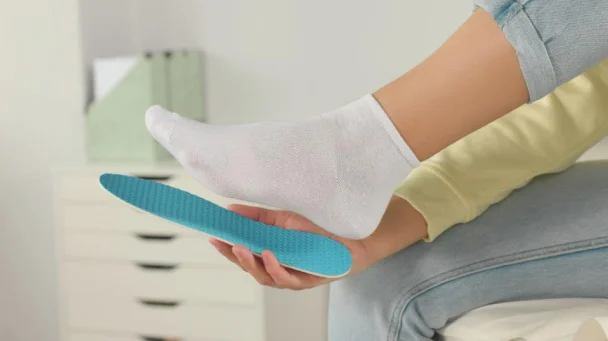
When pain or repeated strain is present, an insert may help support the arch, change pressure, or improve comfort. A ready-made insert is enough for some people. A custom orthotic may be considered when a more specific design is needed after an examination.
Orthotics do not permanently rebuild an adult arch, and they are not a substitute for the right diagnosis, suitable shoes, sensible training, or rehabilitation. Bring your running shoes and any current inserts to an appointment so their fit and wear can be reviewed.
When Should a Runner With Flat Feet See a Podiatrist?
Arrange an evaluation if you have:
- Pain that keeps returning or changes your stride.
- Swelling or tenderness along the inside of the ankle or arch.
- A new flattening of one foot.
- Weakness when pushing off or difficulty rising onto the toes.
- Numbness, burning, or tingling.
- Focused bone pain or pain that increases with each run.
- Symptoms that do not improve after reducing the aggravating activity.
Seek prompt medical care if you cannot bear weight, have severe swelling after an injury, notice a visible deformity, or feel a sudden pop near the Achilles tendon. A foot that becomes cold, pale, blue, or numb also needs urgent care. People with diabetes or poor circulation should seek prompt advice for a blister, wound, or skin change.
How Are Painful Flat Feet Evaluated?
A podiatrist will ask whether your arches have always been low, when the pain started, how training has changed, and which shoes you use. The examination may compare both feet while sitting and standing and assess flexibility, strength, tender areas, and walking mechanics.
Imaging is not necessary for every runner. X-rays or other tests may be recommended when the foot is rigid, the shape has changed, a tendon or stress injury is suspected, or the findings are not clear.
Treatment may include temporary training changes, footwear advice, physical therapy, an insert or orthotic, or a period of protection for an injured structure. Surgery is generally considered only for selected painful or progressive problems that have not responded to suitable nonsurgical care.
Frequently Asked Questions
Can people with flat feet run long distances?
Yes, many people with flat feet run long distances without pain. Build distance gradually and pay attention to recurring heel, arch, ankle, or lower-leg symptoms. Your ability depends on more than arch height.
What are the best running shoes for flat feet?
The best shoe is one that fits properly, feels comfortable, and suits your running and symptoms. Some runners prefer more stability, but not every runner with flat feet needs a motion-control shoe. A podiatrist or qualified shoe professional can help if choosing shoes is difficult or pain continues.
Can running make flat feet worse?
Running does not automatically worsen long-standing, painless flexible flat feet. However, a painful or newly collapsing arch may involve a tendon or another structural problem. Continuing through increasing pain or swelling can aggravate an injury, so a changing arch should be assessed.
Can flat feet cause knee or hip pain?
Foot movement can affect how load travels through the leg, but knee or hip pain cannot be blamed on flat feet from appearance alone. Training, strength, previous injury, and other factors may be involved. An assessment should consider the entire movement pattern.
Can exercises correct flat feet?
Exercises may improve strength, control, balance, and symptoms, but they do not necessarily create a permanent structural arch in an adult. A sudden or progressive loss of the arch needs evaluation rather than exercise alone.
Should I stop running if my flat feet hurt?
Stop or reduce a run when pain is sharp, makes you limp, increases as you continue, or remains worse afterward. You may be able to use a lower-impact activity temporarily, but ongoing pain should be diagnosed before you return to full training.
Running and Flat-Foot Care in Utah
If flat feet are causing pain or limiting your running, Foot & Ankle Specialists of Utah can evaluate your foot mechanics, shoes, and symptoms. Learn about our sports injury care, review custom orthotics, find your nearest Utah location, or request an appointment.
This article provides general education and is not a personal diagnosis, training plan, or substitute for care from a qualified healthcare professional. The online appointment form is not monitored as an emergency service.